

Fishing Tour
Adaptable to several days

Fishing tour


Más de 1500 viajeros contentos
The Amazon Sport Fishing Challenge
$149 por per day
Based on double occupacy
Sport fishing is much more than just casting a hook; it's an active meditation and a deep immersion in nature. In the Peruvian jungle, this activity is elevated to an incomparable experience, combining the thrill of the catch with the majesty of a vibrant ecosystem. It’s an opportunity to disconnect, sharpen the senses, and enter into a quiet, intelligent duel with the planet's most powerful and exotic species.
The Amazon basin, a labyrinth of rivers, lakes (cochas), and streams (quebradas), harbors an unmatched aquatic biodiversity. Adrenaline rushes when you know that beneath the surface lurk giants like the paiche (one of the world's largest freshwater fish) or fierce predators like the tiger fish (payara), piranha, or the unmistakable catfish (bagre). The challenge is not only the fish's strength but also the necessary strategy to navigate the waters and "read" the river.
Sport Fishing Options Leaving from Iquitos
Iquitos, the capital of the Peruvian Amazon, is the ideal starting point for venturing into this discipline. Its strategic location allows access to pristine areas with low fishing pressure
1. Fishing in National Reserves and Protected Areas
The conservation areas near Iquitos offer the best opportunities for catching large, healthy specimens:
-
Pacaya Samiria National Reserve: Located south of Iquitos, at the confluence of the Marañón and Ucayali Rivers. Fishing here is strictly catch-and-release, focusing entirely on conservation. It's famous for its high species density and the chance to find paiche and large catfish (bagre).
-
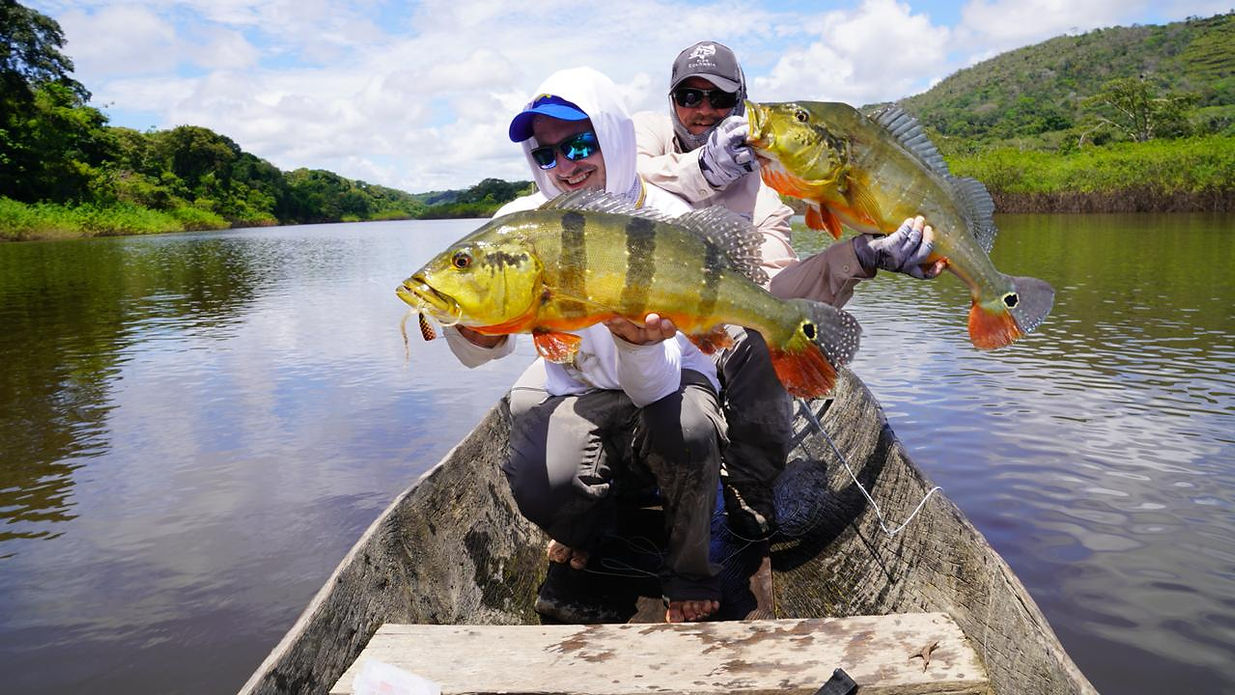
Amazon River and its Tributaries: The countless tributaries and lakes (cochas) surrounding Iquitos (such as the Nanay River basin) are excellent for fishing for peacock bass (tucunaré), one of the most sought-after species due to its aggressiveness and striking beauty.
2. Expedition Options
Sport fishing tours from Iquitos typically last 3 to 7 days and include accommodation either in specialized lodges or aboard expedition river cruises (larger "mother ships" equipped with auxiliary skiffs for fishing).
-
Trolling and Baitcasting: These are the most common techniques for targeting peacock bass (tucunaré) in the lakes (cochas) and the river. Robust equipment is essential due to the explosive force of these species.
-
Fly Fishing: Although less common, it is gaining popularity, especially for catching sábalo and peacock bass.
-
Bottom Fishing (Giant Catfish): This is done using large bait in the deeper parts of the main river or its tributaries, targeting huge Amazonian catfish (like the dorado or piraíba), which can weigh over 100 kg (220 lbs).
The experience is complemented by the unmatched landscape of the virgin jungle, sightings of pink river dolphins, and opportunities to interact with local communities, making sport fishing in Iquitos a complete nature and culture adventure.
-
Tucunare (Cichla monocolus) Peacock bass
-
Peje Torres (Phractocephalus hemioliopterus) Redtail catfish
-
Maiden (Pseudoplatystoma punctifer) Spotted tiger shovelnose catfish
-
Dorado (Brachyplatystoma flavicans) Golden catfish
-
Zungaro (Pseudoplatystoma tigrinum) Tiger catfish
-
Salton (Brachyplatystoma filamentosum) Goliath catfish
-
Gamitana (Colossoma macropomum) Blackfin Pacu
-
Paco (Piaractus brachypomus) Red-bellied Pacu
-
Arahuana (Osteoglossum bicirrhosum) White dragon fish
-
Toa (Hemisorubim platyrhinchos) Porthole Shovelnose Catfish
-
Bocon (Ageneiosus ucayalensis) Driftwood catfish
-
Shiripira (Sorubim lime) Shovelnose Duck-beak Catfish
-
Paiche (Arapaima Gigas)
What can be caught during the season is from June to August. We'll be camping in different areas as we move through the jungle.
The Tour Includes:
Exploration team,
Fishing equipment,
Breakfast, Lunch and Dinner,
Camping equipment,
Spanish and English speaking guide,
transportation.